It's one of the most common objections that comes up when senior living operators hear what NextWave does.
We respond to every lead, work every digital channel, book tours, and guarantee show-ups and then someone says: "So I have to pay A Place for Mom and you?"
The short answer is yes.
But the question itself reveals a misconception about what you're actually paying for in each case and what each dollar is actually doing.
This blog walks through the three-part answer that shows how you’re actually saving money.
First, understand what you're already paying for and what you're not getting
A Place for Mom charges a move-in fee. It's only triggered when a lead from their platform moves into your community.
The implication is that you're paying for results, but what you're really paying for is access to the lead: A name, a phone number, a family expressing interest.
What happens between that inquiry and the move-in?
That's entirely on you.
And the data on what actually happens is sobering.
About 35% of all senior living inquiries come from referral platforms like A Place for Mom, but only 4% of those inquiries result in a move-in. That means the overwhelming majority of leads you receive from a platform you're paying handsomely per move-in are converting at a very low rate.
So the question isn't whether you're paying too much for leads.
The question is: why are you converting so few of the ones you're already getting?
Reason 1: Being first matters and right now, you probably aren't
When A Place for Mom sends out a lead, they don't send it to just you.
That same family inquiry typically goes to four, five, or six communities simultaneously. Every one of them is theoretically racing to be the first to pick up the phone.
Speed-to-lead in senior living isn't a nice-to-have.
Research shows that the first community to make live contact with a prospect is dramatically more likely to book the tour and our own data across 150+ secret-shopped communities found that only 3% of communities responded within 30 minutes.
The average response time? 46 hours.
If you're relying on an in-house sales director to respond to an A Place for Mom lead while they're mid-tour, processing a move-in, or simply not at their desk, you're not first. Maybe you’re fourth, and by the time you call, that family has already scheduled a tour with someone else.
This is what paying for NextWave actually solves on referral platform leads: you become first, consistently, across every lead that comes in, regardless of what your sales director is doing at that moment.
When you're first to call a lead that's been sent to five communities, you're not just ahead. You're in a completely different conversation than the communities still leaving voicemails.
That changes the math on what you're paying A Place for Mom entirely. You're not paying a move-in fee for leads that convert at 4%. You're paying a move-in fee on leads where you actually got to the prospect and had the conversation that converted them.
Not to mention, you save the time and attention of your in-house sales team who is allocating effort to make the call a day later (with low chances of success).

Reason 2: We don't just respond to A Place for Mom, we handle everything digital
The second part of the answer to this objection is that the comparison itself isn't quite right.
A Place for Mom gives you one channel: referral leads from their platform.
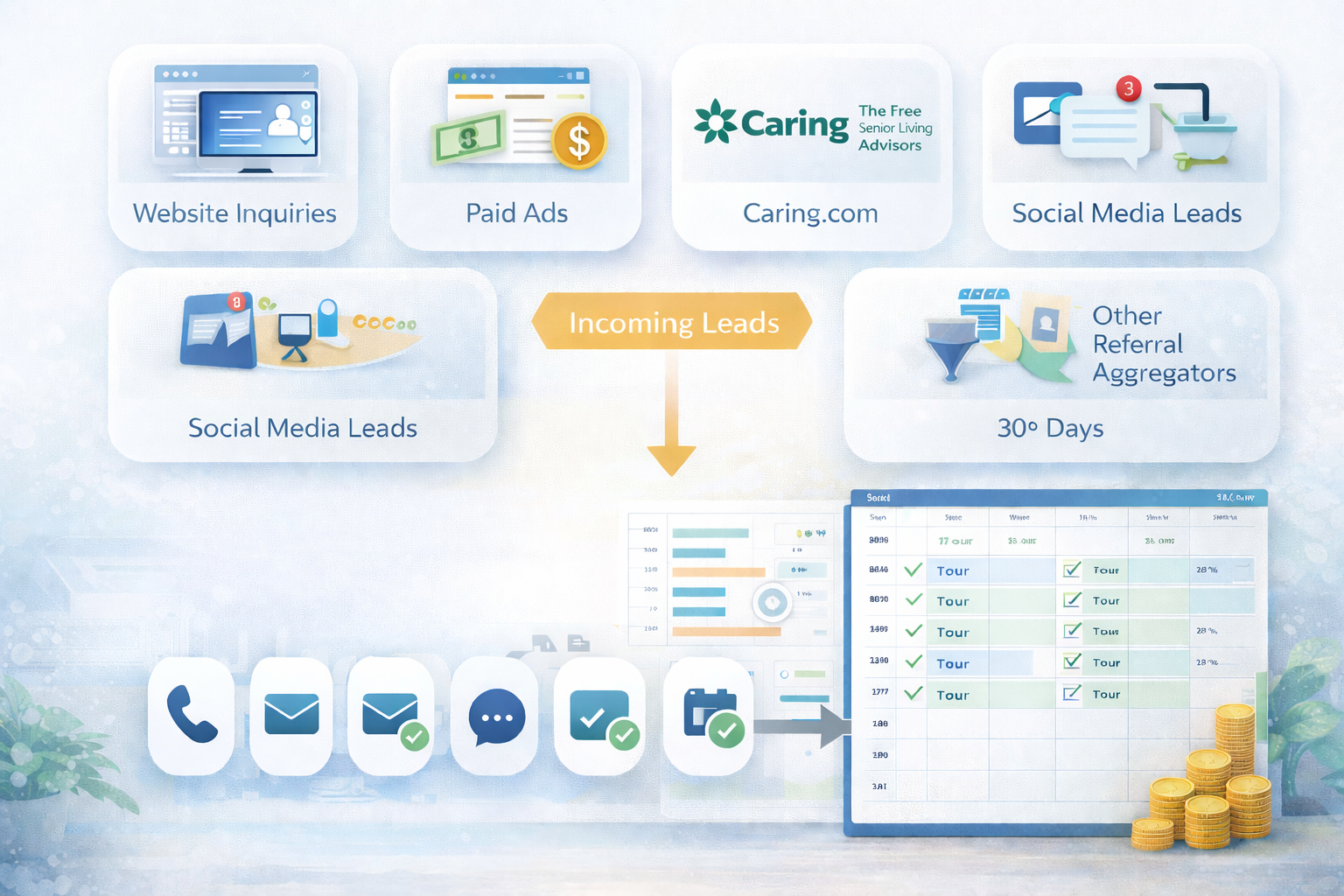
NextWave responds to your entire digital universe: website inquiries, paid digital ads, other referral aggregators like Caring.com, social media leads, and any other digital source sending prospects your way.
Some senior living communities are receiving leads from five or more sources simultaneously. Each one requires fast response, consistent follow-up across multiple touchpoints over a period of time, and the kind of warm, knowledgeable conversation that moves a family from curious to committed.
If you're going to staff that internally, you're looking at a dedicated headcount, someone whose only job is lead response and appointment setting, not tours, not move-ins, not everything else that lands on a sales director's desk.
Our data shows that a sales director trying to cover lead response alongside everything else averages fewer than 2 follow-up attempts per lead, in an industry that requires 9 touchpoints to convert a lead to a tour.
So when someone asks whether they're paying for two things, the better reframe is: you're paying A Place for Mom for access to referral leads on their platform.
You're paying NextWave for a fully built, fully staffed response and appointment-setting operation that covers your entire lead flow. Those are not the same thing.
Reason 3: We catch duplicate leads and that saves you real money
The third piece of this answer is one most operators don't realize until they've been working with us for a few months.
Referral platforms like A Place for Mom have a duplicate lead policy.
If a prospect already exists in your database before the platform sends them to you, and that prospect ends up moving in, you can dispute the move-in fee, but only if you catch the duplicate and report it within their required window.
When your sales director is managing 80 leads in a CRM while also giving tours, that kind of cross-referencing almost never happens. Not because no one cares, because no one has time.
Our team checks every inbound lead against your existing database the moment it arrives. When we find a match, we report it immediately. When that prospect moves in, you don't pay a move-in fee that could run into the tens of thousands of dollars.
Even a handful of successfully disputed duplicate leads over the course of a year represents a return that meaningfully offsets the cost of the service, before you account for any of the additional tours and move-ins we're generating on top of it.

So what does the ROI actually look like?
The honest answer is: it depends on your portfolio, your lead volume, your current conversion rates, and how many communities you're running.
But here's the framework we use with every client:
- If your lead-to-tour conversion rate is below 10%, you're leaving occupancy on the table. Our clients average more than double the industry benchmark.
- If your speed-to-lead is measured in hours rather than minutes, you're handing your referral leads to your competitors. We average under 30 minutes.
- If you're not systematically checking for duplicate leads on every referral inquiry, you may be paying move-in fees you simply don't owe.
When you look at those three levers together — more conversions from the same referral leads, coverage across all digital lead sources, and duplicate lead savings. The question changes from "Am I paying too much?" to "What was I leaving on the table before?"
One of our clients saw their portfolio value increase by millions simply from improving their contact rate, getting to more prospects faster, from the same lead flow they already had. The leads weren't the problem, it was the system that was designed to fail them.
The real cost comparison
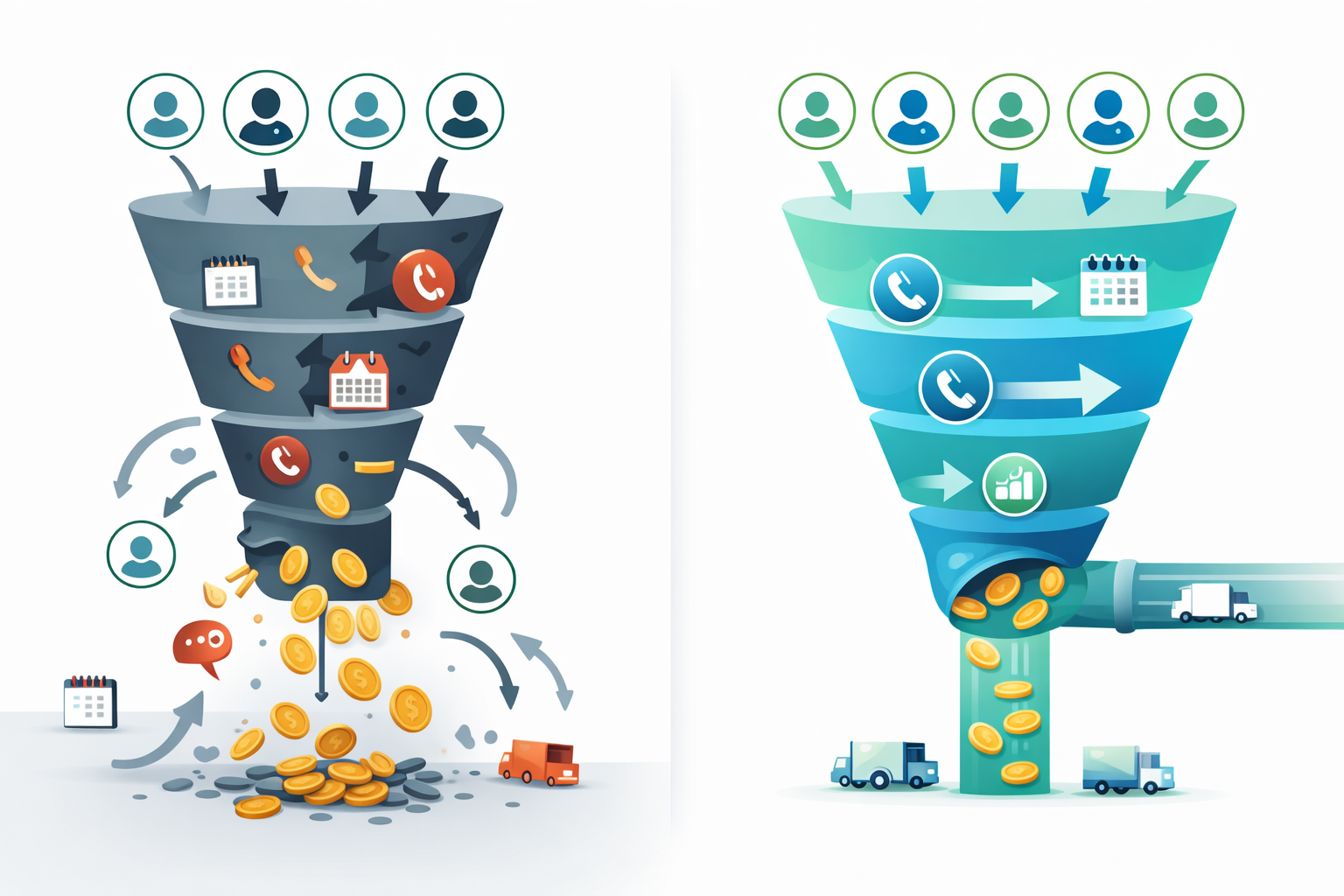
If you're paying A Place for Mom thousands of dollars per move-in, and your in-house conversion rate on their leads sits at 4%, you're not getting what you're paying for. Not because A Place for Mom isn't delivering leads, they are. But because the follow-up system on your end isn't converting them.
Adding NextWave to that equation doesn't increase your cost per move-in. It lowers it by making sure you're actually converting the referral leads you're already paying for, covering every other channel you're spending marketing budget on, flagging the duplicate fees you'd otherwise miss, and saving your in-house team time and effort.
The objection assumes that the two costs are additive in a zero-sum way. The math, when you run it properly, shows something different: one cost enables the return on the other.
Key takeaways
- A Place for Mom charges per move-in but only 4% of their leads convert industry-wide. The bottleneck isn't the lead. It's what happens after the lead arrives.
- Speed-to-lead determines who gets the conversation. If you're not first to call, you're competing for a prospect who may already have tours booked with two or three other communities.
- NextWave covers your entire digital lead universe (website, digital ads, other aggregators) not just one referral platform. You're not paying for two versions of the same thing.
- Duplicate lead reporting is money left on the table at most communities. We catch and report duplicates in real time, protecting you from move-in fees you don't owe.
- The ROI framework is simple: more conversions from your existing leads, faster response across all channels, and recovered move-in fees. Add those up before you add up the line items.
Next steps
Pull up your last 90 days of A Place for Mom leads. Find out how many received a response within 30 minutes. Find out how many received more than two follow-up attempts. Find out how many were checked against your existing database for duplicates.
Compare those numbers against what you're paying per move-in.
If the gap is what we typically see, and it usually is, you don't have a lead quality problem. You have a conversion problem. And the fix starts with making sure every lead gets a fast, consistent, persistent response from someone whose only job is to make that happen.
Want more like this? Subscribe to The Follow-Up, our monthly newsletter with insights on speed-to-lead, follow-up systems, and how to turn inquiries into tours and move-ins.
NextWave helps senior living communities optimize every stage of the lead-to-tour pipeline through the Occupancy Advantage System™. Our team handles the micro-level optimization that community sales directors don't have time for — from nurture sequence testing to CTA placement to send-time analysis — across entire portfolios. Book a call to learn how small improvements in your existing lead flow can produce outsized results.
.webp)
.png)