We secret-shopped 150 senior living communities across 20 states. We submitted urgent tour inquiries through their websites. We used real phone numbers and email addresses and tracked every response.
Forty-one of those communities never responded at all.
That’s 28%.
Nearly one in three communities paid for a lead, received an inquiry from a family urgently looking for care, and did nothing.
The frustrating part is that this isn’t a lead quality problem.
The way that we designed the process was to simulate real urgency. The framing was from a family member in need, sent with a request to schedule a tour as soon as possible. The interest was there, but the follow-through wasn’t.
This is the 30% problem and it’s costing communities far more than most operators realize.
What the data actually shows
The non-response finding was the most striking, but it wasn’t the only problem our study surfaced. Here’s what we found across all 150 communities:
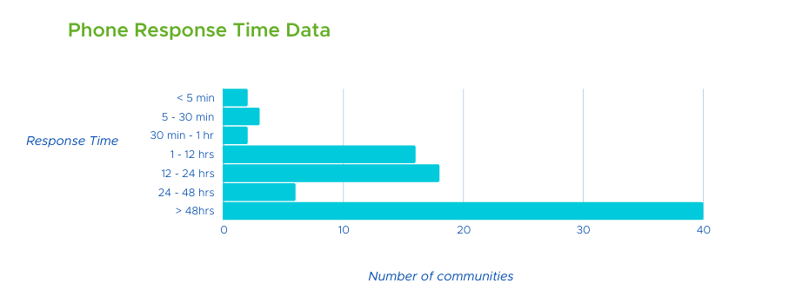
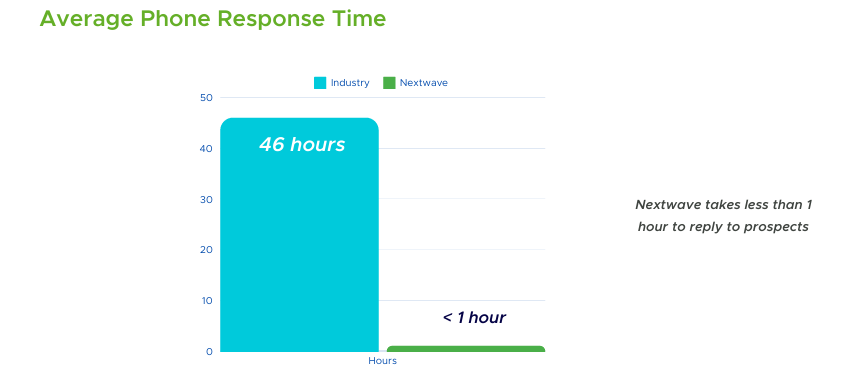
- Average phone response time: 46 hours
- Average follow-up attempts: 2
- Communities that made zero phone call attempts: 42%
- Communities responding in under 30 minutes: 3%
- Communities taking over 48 hours to respond: 45%
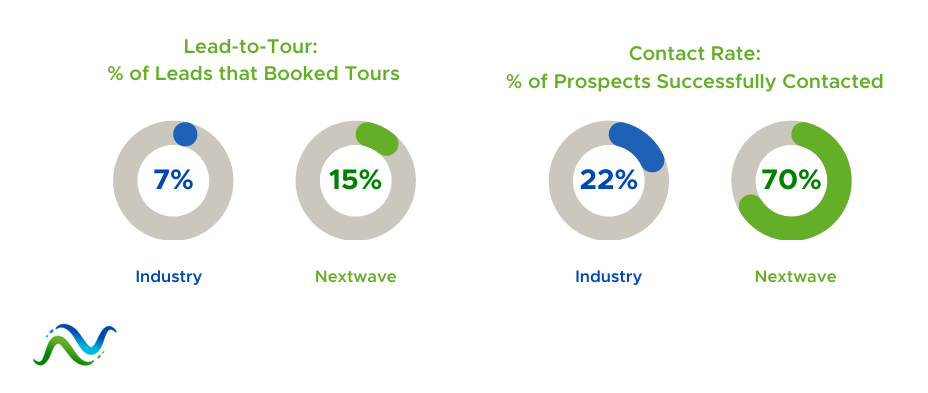
- Contact percentage: 22%
- Lead-to-tour conversion percentage: 7%
Out of every 100 leads these communities were paying for, only 7 became a tour. That’s not a marketing problem, but a systems problem.
Why non-response is different from slow response
A lot of the conversation in senior living sales focuses on speed-to-lead, which is the idea to respond as fast as you can, with a phone call, and ideally within five to thirty minutes.
That’s all true, and it matters, but non-response is a different problem entirely.
A slow response at least gives a prospect a chance to hear from you, whereas non-response means that lead is simply gone. The family moved on and toured somewhere else, made a decision, or stopped looking entirely. There is no version of that outcome where your community benefits.
What makes non-response so damaging is that it’s invisible because it doesn’t show up in your CRM as a missed call. It doesn’t generate a report flagging what happened. It just looks like marketing spend that didn’t convert, and oftentimes the lead then gets mislabeled as “bad.” The budget and the effectiveness of the lead source from upper management then gets questioned.
At the same time, nobody asks: did we actually respond?
The real cost of a non-responded lead
Senior living leads aren’t cheap. Referral leads from platforms like A Place for Mom or Caring.com often run $400 or more per inquiry. Paid digital leads vary, but communities routinely spend $10,000 to $30,000 or more per month on lead generation.
If you run the math on non-response:
A community is spending $20,000 a month on leads. If 28% of those leads never get a response, that’s $5,600 every month going to zero. Over a year, that’s $67,200 in lead spend with no chance of return because leads were ignored.
For operators managing multiple communities, multiply that number by the amount of communities across the portfolio. For private equity groups evaluating portfolio performance, this isn’t just a sales issue, it’s an asset management issue. Unresponded leads are directly eroding NOI.
Why this happens (it’s usually not laziness)
Sales directors at senior living communities are not ignoring leads because they don’t care. In most cases, they care deeply. The problem is structural.
One person is doing three jobs
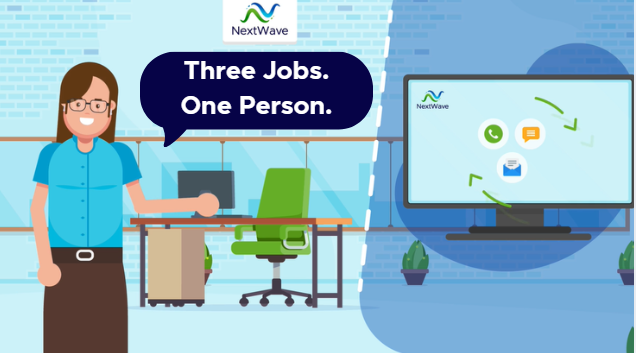
The typical senior living sales director is responsible for lead response, tours, follow-up, move-in coordination, and pipeline management all at once. When they’re mid-tour with a family, they can’t answer an incoming inquiry in the recommended response time of 5-30 minutes. When they’re processing a move-in, they’re not calling yesterday’s leads.
The job wasn’t designed to do all of this simultaneously because nobody physically can do it in an optimized way.
After-hours inquiries fall through the cracks
More than 20% of senior living inquiries come in after hours or on weekends and most communities have no coverage for this. A lead submitted at 7pm on Friday sits until Monday morning. That’s 60 or more hours of silence while the prospect is actively deciding where to tour.
It’s not a decision against responding after hours, it’s that nobody ever assigned ownership of that window and that gap exists by default, not by design.
Lead routing is broken
Many communities route web inquiries to general inboxes that get checked infrequently. Phone calls go to the front desk. The receptionist takes a message. That message eventually reaches the sales director, who has six other things in front of it.
By the time the lead gets to the right person, hours or days have passed. In some cases, it never gets there at all.
There’s no accountability system
Most operators can’t tell you what their current non-response rate is. They aren’t tracking it in a CRM, and if they are, it hasn’t been updated. There’s no dashboard showing which leads were never contacted, no alert when 48 hours passes without follow-up, no accountability loop that catches a lead falling through the cracks.
Without measurement, the problem stays invisible. And invisible problems don’t get fixed.
What fixing it actually requires
The solution to non-response isn’t telling your sales team to try harder.
Communities that have solved this problem share a few common elements:
- Dedicated lead response coverage that isn’t the same person giving tours
- Real-time alerts when new leads arrive
- Defined ownership of after-hours and weekend inquiries
- A CRM setup that tracks contact attempts automatically rather than relying on manual logging
Some communities build this internally by hiring a dedicated business development rep focused solely on lead response and appointment setting. Others outsource it to a partner who can guarantee coverage and response times.
Either way, the principle is the same: lead response needs to be someone’s only job, especially in communities that are receiving a high amount of inbound, digital leads. It can’t just be a task that gets done “when there’s time,” or squeezed in between tours.
By comparison, NextWave responds to 100% of leads, with an average response time of under one hour. Our lead-to-tour conversion rate is 15% — more than double the industry average, and the difference isn’t the leads, it’s the system behind them.
Key takeaways
- 28% of senior living communities never responded to an urgent tour inquiry. That’s nearly one in three leads paid for and completely abandoned.
- 42% of communities made zero phone call attempts. Email alone isn’t enough to convert a lead to a tour.
- For a community spending $20,000/month on leads, 28% non-response equals $67,200/year in wasted spend with no possible return.
- Non-response is invisible in most reporting. It looks like marketing underperformance. It’s actually an operations problem.
- The root cause isn’t effort. It’s structure. Sales directors can’t respond instantly when they’re giving tours, and no one else owns the process.
- Only 3% of communities in our study responded within 30 minutes. Closing this gap requires dedicated coverage, not harder work from the same overloaded person.
- For portfolio operators and private equity groups, non-response is an asset-level problem. It shows up in occupancy, NOI, and property valuation.
Next steps
Start by finding out your current non-response rate. Have someone (we can do this) submit a test inquiry to your communities and track whether it gets a response, and how long it takes. Do it on a Friday evening. Do it over a holiday weekend.
What you find will tell you a lot about the size of the problem.
NextWave helps senior living communities eliminate non-response through the Occupancy Advantage System™. Our clients see 91% faster speed-to-lead and 48% higher lead-to-tour conversion rates. Schedule a conversation to learn how we can help your community respond to every lead, every time.
.webp)
.png)